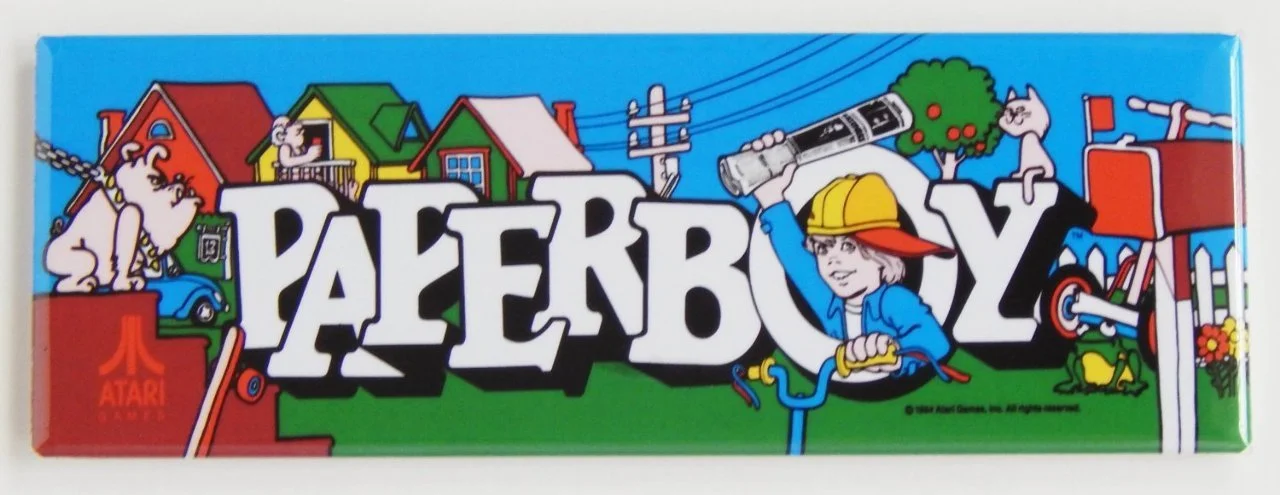
Delivering the Future: A Look at the Paperboy FigJam Boards
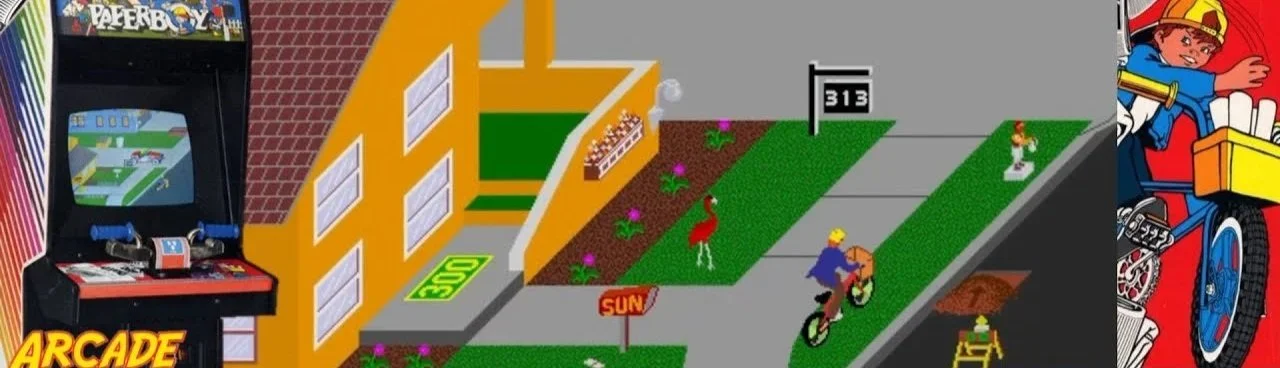
After wrapping up our work on Galaga, the Advanced Concept Art course is moving on to Paperboy for the Spring 2026 semester.
The Choice of Paperboy
We chose Paperboy because its mechanical constraints are useful for teaching concept art. While Galaga was about scale and alien environments, Paperboy focuses on the "courier" archetype. It offers a clear, rhythmic loop that works well for subversion.
From a design standpoint, we are looking at three main pillars: the character as a mobile agent, the vehicle as a functional tool, and the environment as a series of obstacles. By moving away from the 1980s nostalgia, students are challenged to rebuild these elements in new contexts. The goal is to see how a simple delivery mechanic can be used to drive a high-stakes narrative or complex worldbuilding.
The FigJam Phase
Students spent the first week building FigJam boards. This is a standard part of our workflow for mapping out visual references, mechanics, and initial sketches. These boards act as the framework for modernizing the original 1985 game.
In this phase, we aren't just looking for a "reskin." We want a structural reinterpretation of how delivery works. The class is currently exploring various genres, including urban drama, speculative fiction, and horror. By breaking down the simplicity of the original game, students are finding ways to apply concept art to more sophisticated storytelling and environmental design.
Below is a look at the current progress and the specific directions the students are taking:
Jamison Brauer’s PacketBoy
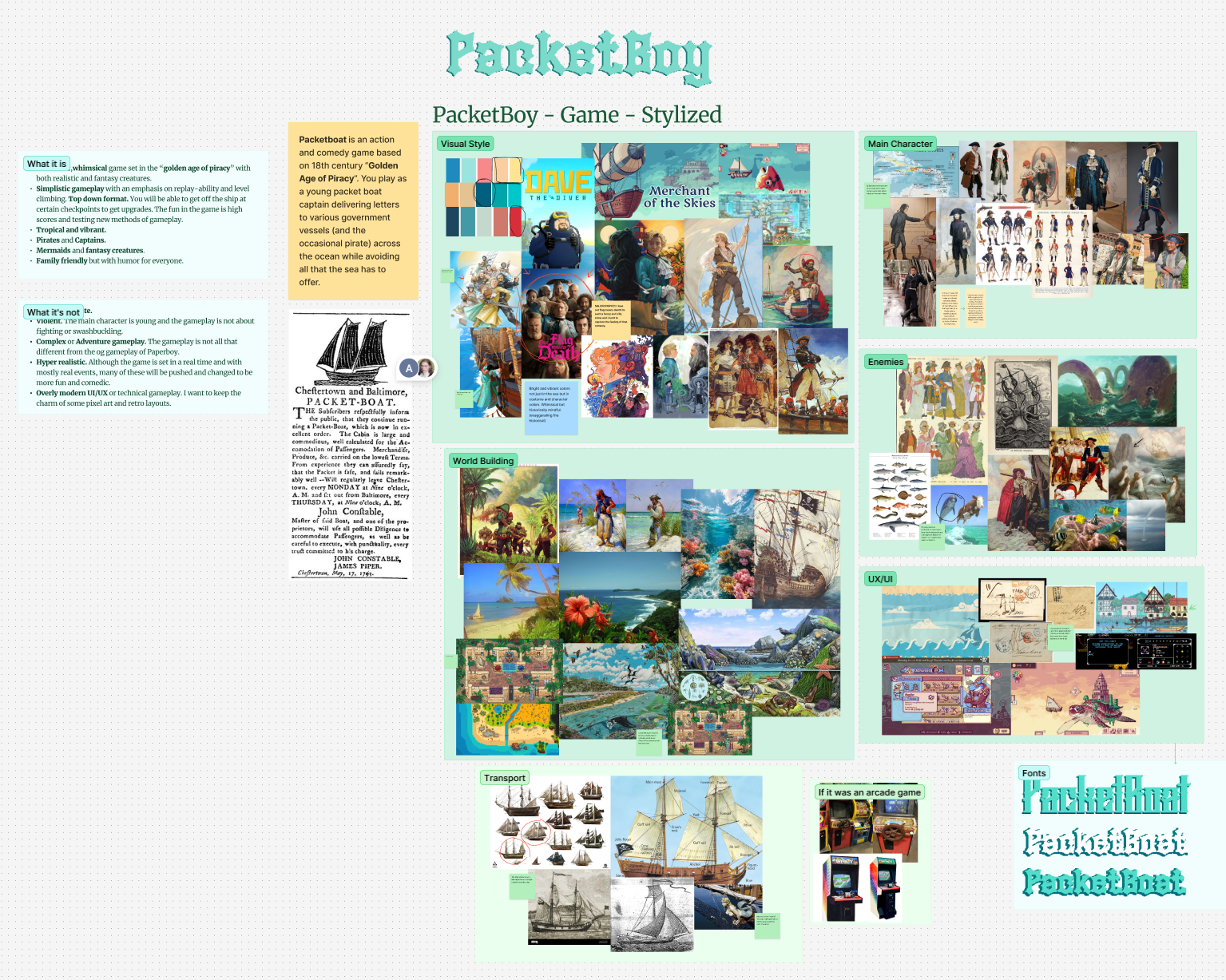
Jamison’s project, PacketBoy, is a historical recontextualization that moves the delivery loop from the suburbs to the high seas during the 18th century Golden Age of Piracy. The concept frames the protagonist as a young packet boat captain responsible for delivering letters to government vessels and various maritime factions while navigating hazards such as pirates and sea monsters. The visual direction utilizes a vibrant, tropical color palette and a whimsical, stylized aesthetic that maintains the top-down perspective and replayability of the original arcade game while introducing naval upgrades and historical worldbuilding elements.
Deja Pemberton’s PAPER BOY
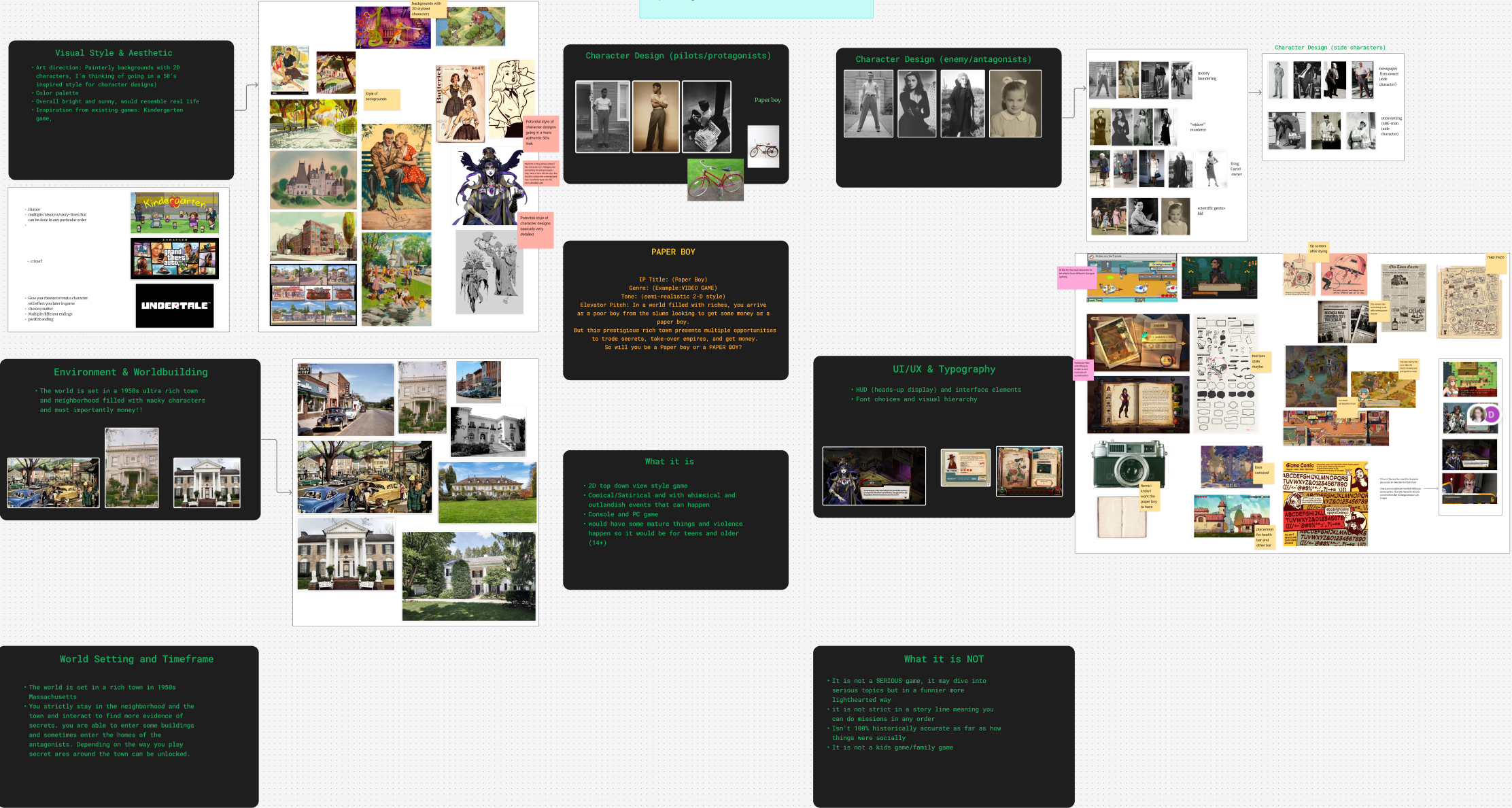
Deja Pemberton’s project, PAPER BOY, is a top-down adventure game that utilizes the delivery mechanic to explore themes of social mobility and corporate espionage. Set in a prestigious, wealthy town during the 1950s, the narrative follows a protagonist from the slums who begins a standard paper route but quickly discovers opportunities to trade secrets and dismantle financial empires. The visual framework employs a "painterly" art direction with a bright, saturated color palette inspired by mid-century Americana and titles like Kindergarten. This reinterpretation shifts the focus from simple labor to a satirical, choice-driven experience where players must decide between being a standard delivery boy or a powerful "PAPER BOY" through social maneuvering and investigation.
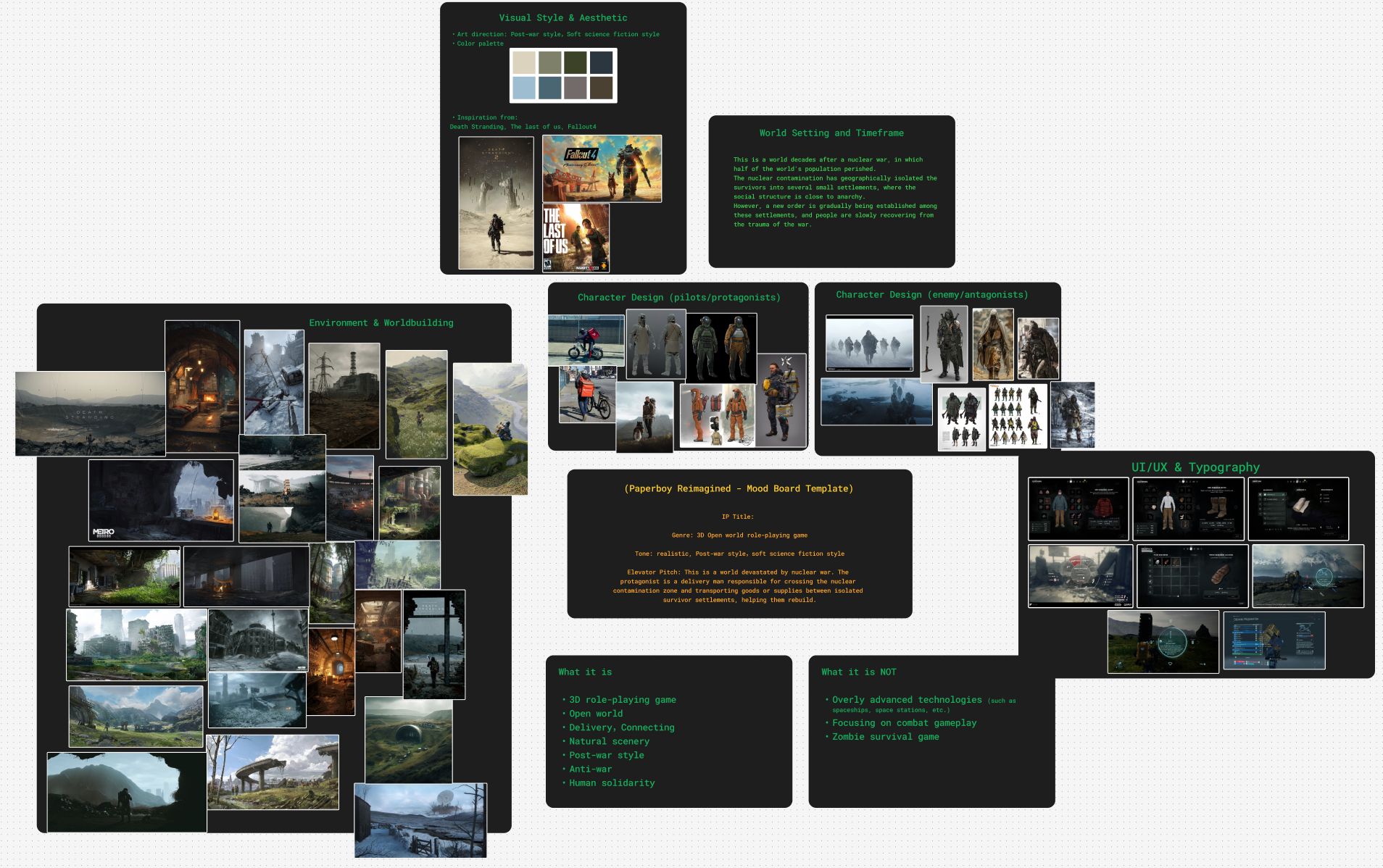
Yiyue Wang’s Post-War Courier
Yiyue Wang's project is a 3D open-world role-playing game set decades after a global nuclear war. Humanity is gradually recovering, and players take on the role of a former "paperboy" who travels between scattered communities to deliver essential supplies and information. The visual framework utilizes a realistic, post-war, soft science-fiction style with a muted, desaturated color palette. The journey leads players through ruins of former neighborhoods that have become dangerous contaminated zones, emphasizing themes of human solidarity and reconnecting a fragmented world.
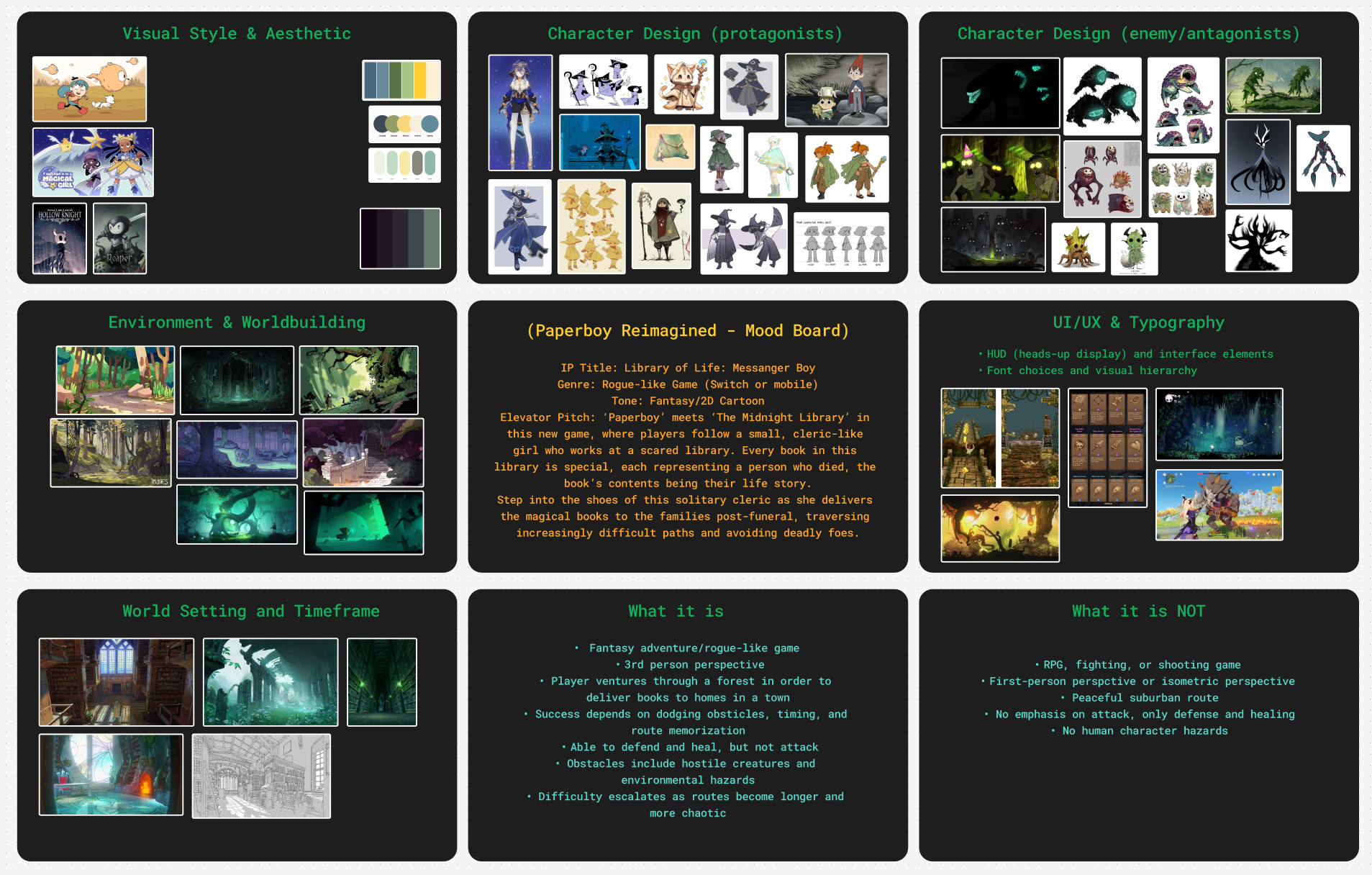
Kat Tomlin’s Library of Life: Messenger Boy
Kat Tomlin's project, Library of Life: Messenger Boy, reimagines the courier mechanic as a 2D fantasy rogue-like. Players control a solitary, cleric-like character tasked with delivering paper talismans from a sacred library to villagers living in a monster-infested forest. The design focuses on a 3rd-person perspective where success depends on route memorization and dodging environmental hazards rather than combat. The visual framework leverages a "Fantasy/2D Cartoon" tone, utilizing atmospheric lighting and mystical woodland settings to create a sense of peril and purpose.
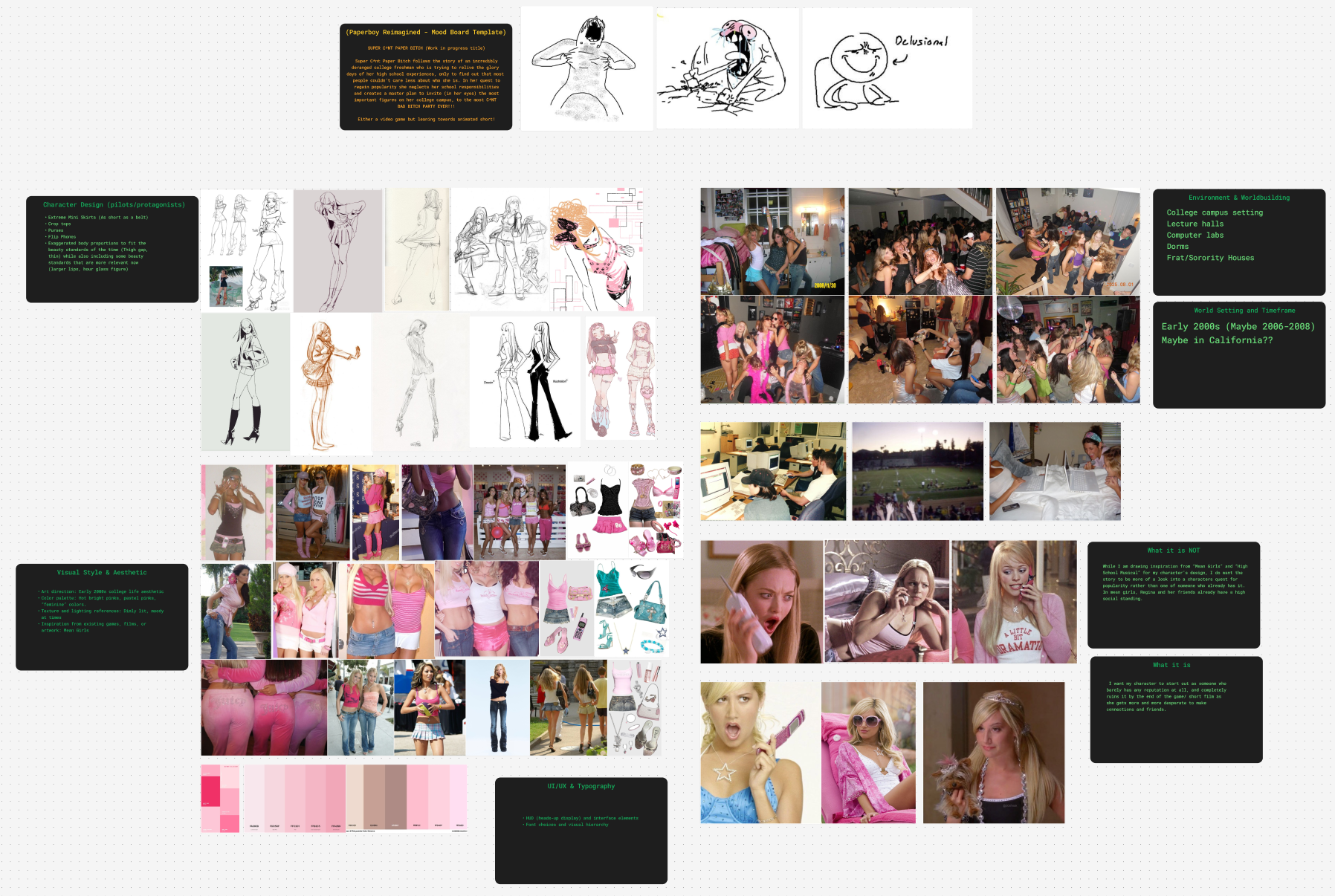
Isabella Espinoza’s Super C*nt Paper Bitch
Isabella Espinoza presents Super C*nt Paper Bitch, a project that shifts the delivery mechanic into a social-satirical context set on a college campus in the early 2000s. The narrative follows a deranged freshman attempting to regain her high school popularity by delivering party invitations to influential campus figures. The visual style draws heavily from Y2K-era "mean girl" aesthetics, utilizing a palette of bright pinks and pastels alongside character designs that emphasize the fashion trends of that period. This concept explores the courier loop as a means of social maneuvering, leaning toward an animated short or a stylized video game format.
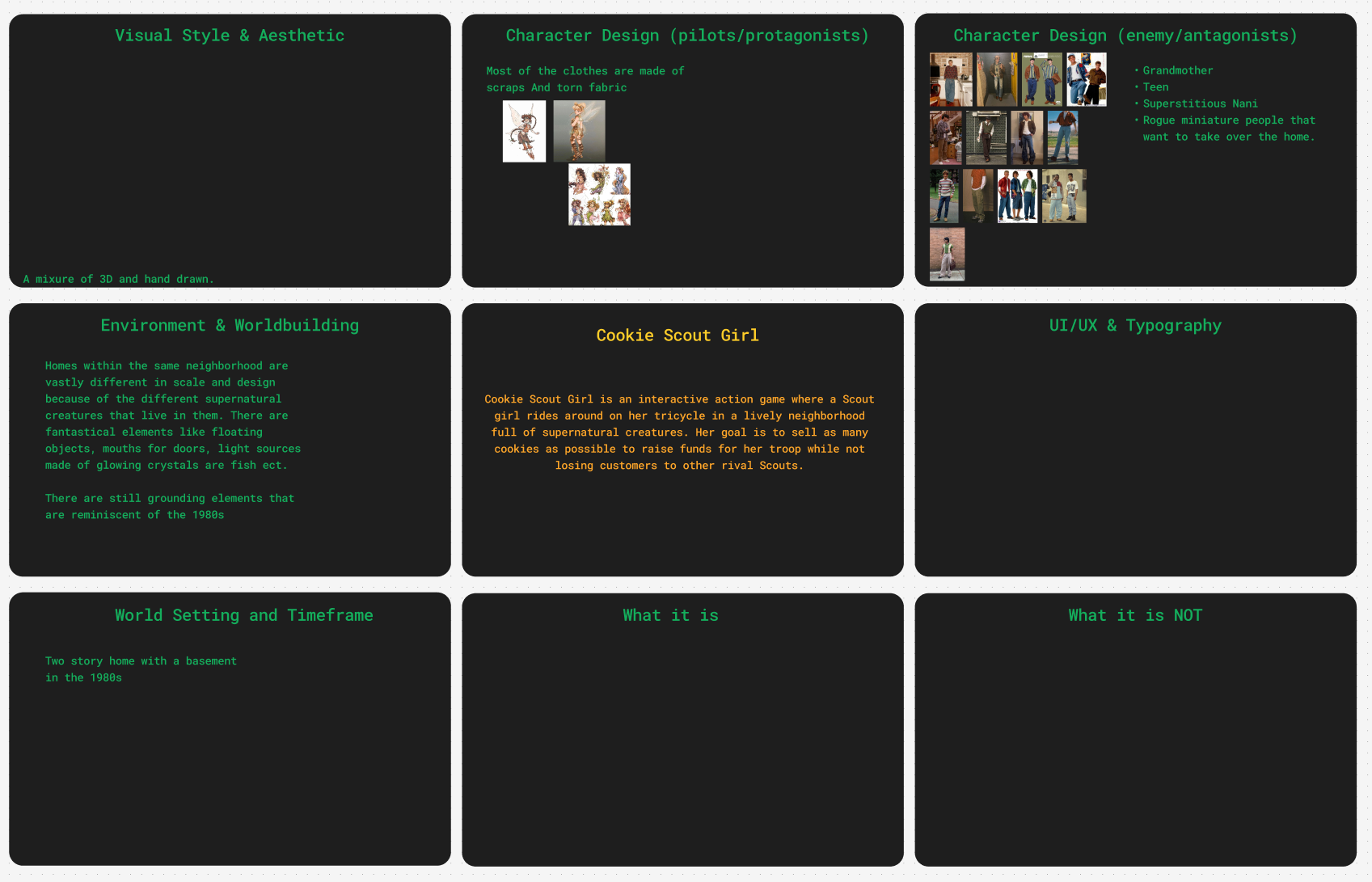
Khedvah Edwards’ Cookie Scout Girl
Khedvah Edwards presents Cookie Scout Girl, an interactive action game that replaces the traditional paper route with a scout on a tricycle navigating a 1980s neighborhood inhabited by supernatural creatures. The core objective involves selling cookies and magazines to raise troop funds while competing against rival scouts for a limited customer base. The project maintains grounded elements from the 1980s but introduces fantastical environmental hazards, such as floating objects and light sources made of glowing crystals, to create a distinct, surreal atmosphere.
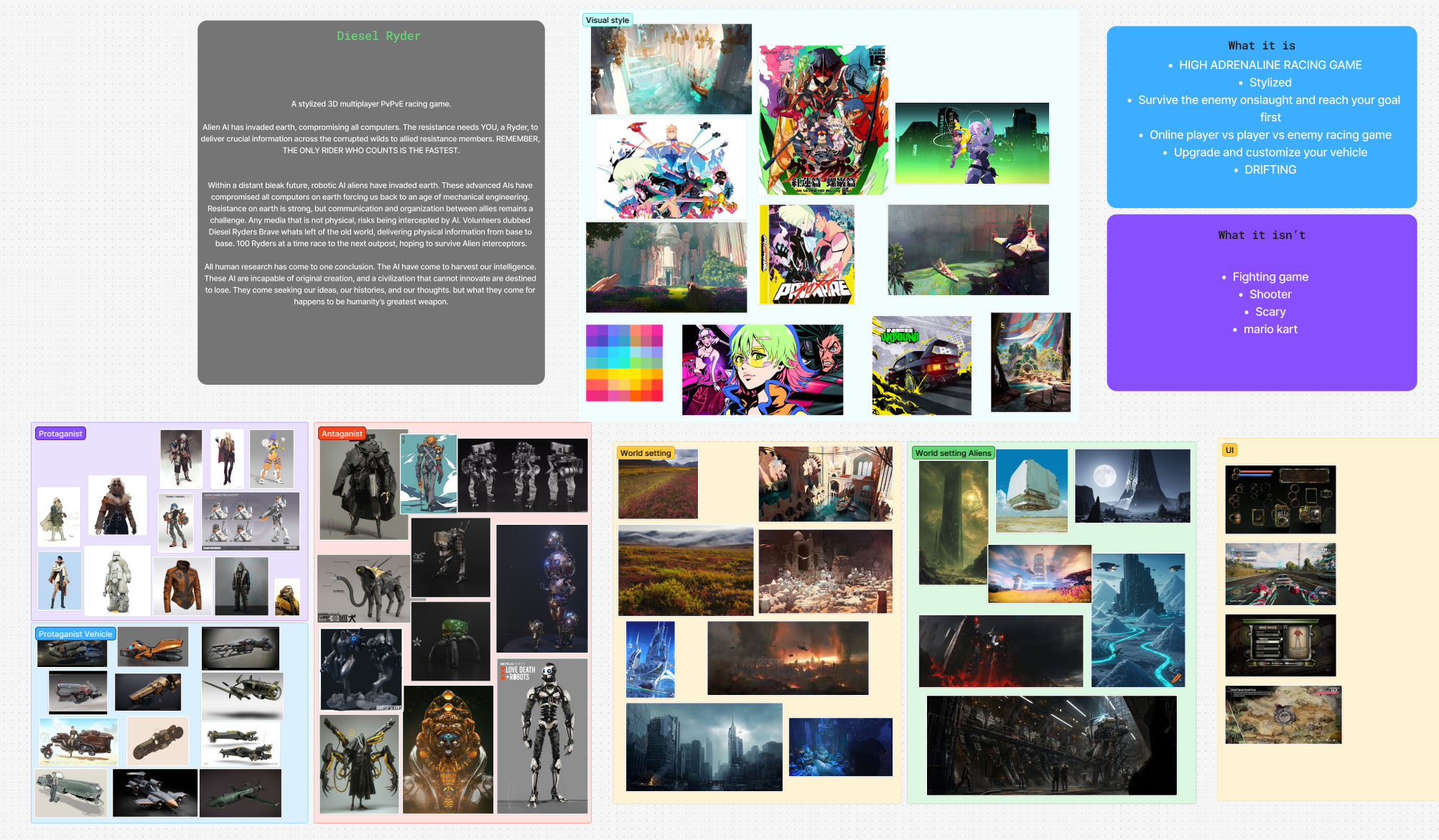
Charles Fisher’s Diesel Ryder
Charles Fisher’s project, Diesel Ryder, is a stylized 3D multiplayer PvPvE racing game set in a future where an invasive alien AI has compromised all digital communication. Players take on the role of a "Ryder," tasked with navigating a robotic wilderness to deliver physical, coded papers containing crucial information to allied resistance members. The visual framework emphasizes a high-adrenaline aesthetic influenced by titles like Promare and Need for Speed Unbound, focusing on drifting mechanics and vehicle customization. This concept reimagines the paper route as a high-stakes survival race across a post-technological landscape where speed is the primary requirement for success.
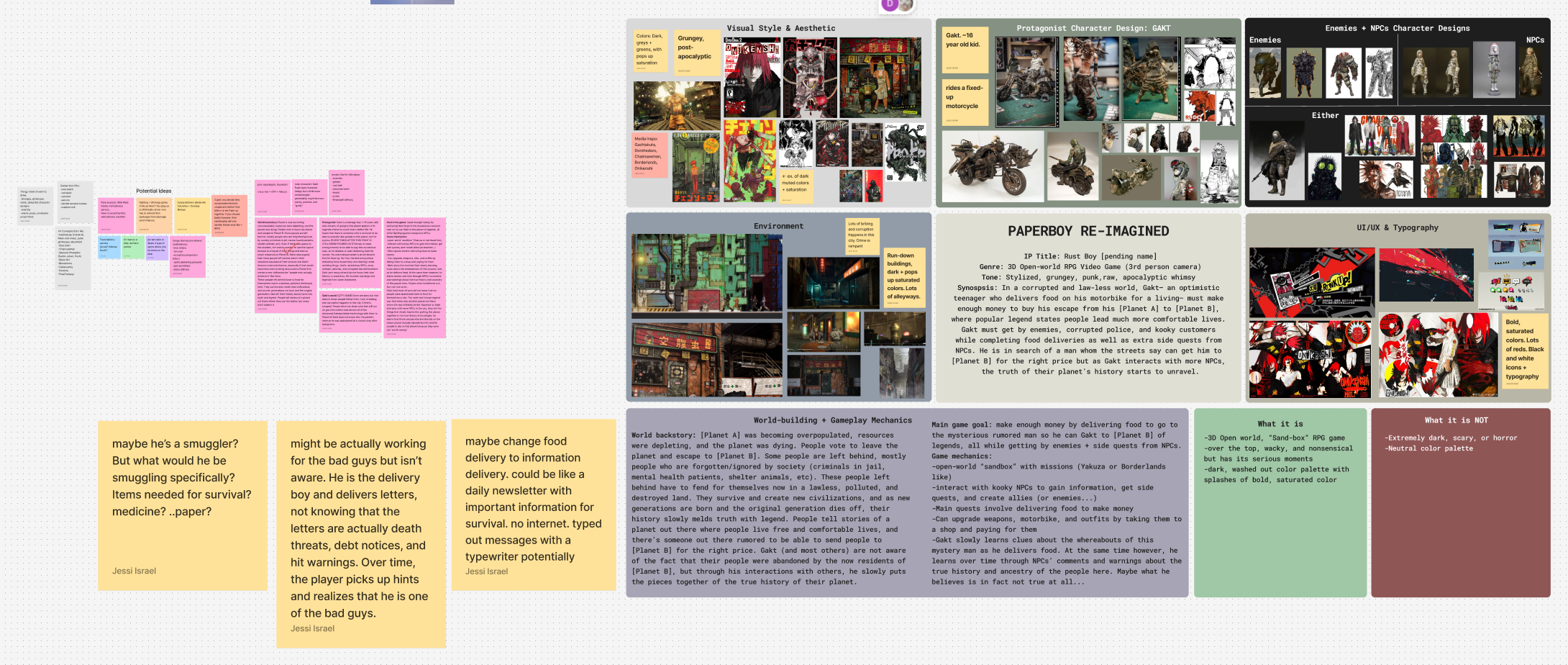
Jessi Israel’s Rust Boy
Jessi Israel’s project, Rust Boy, is a 3D open-world RPG that reimagines the delivery mechanic within a post-apocalyptic, "diesel-punk" setting. Players take on the role of Gakt, an optimistic teenager who delivers food and encoded messages on a motorbike to navigate a lawless world while avoiding a rival syndicate. The visual framework utilizes a "grungy, punk-raw, apocalyptic whimsy" tone, featuring a dark, washed-out color palette punctuated by bold, saturated reds. The project emphasizes environmental storytelling through a world where players uncover the truth about a dying planet as they complete deliveries between various checkpoints.
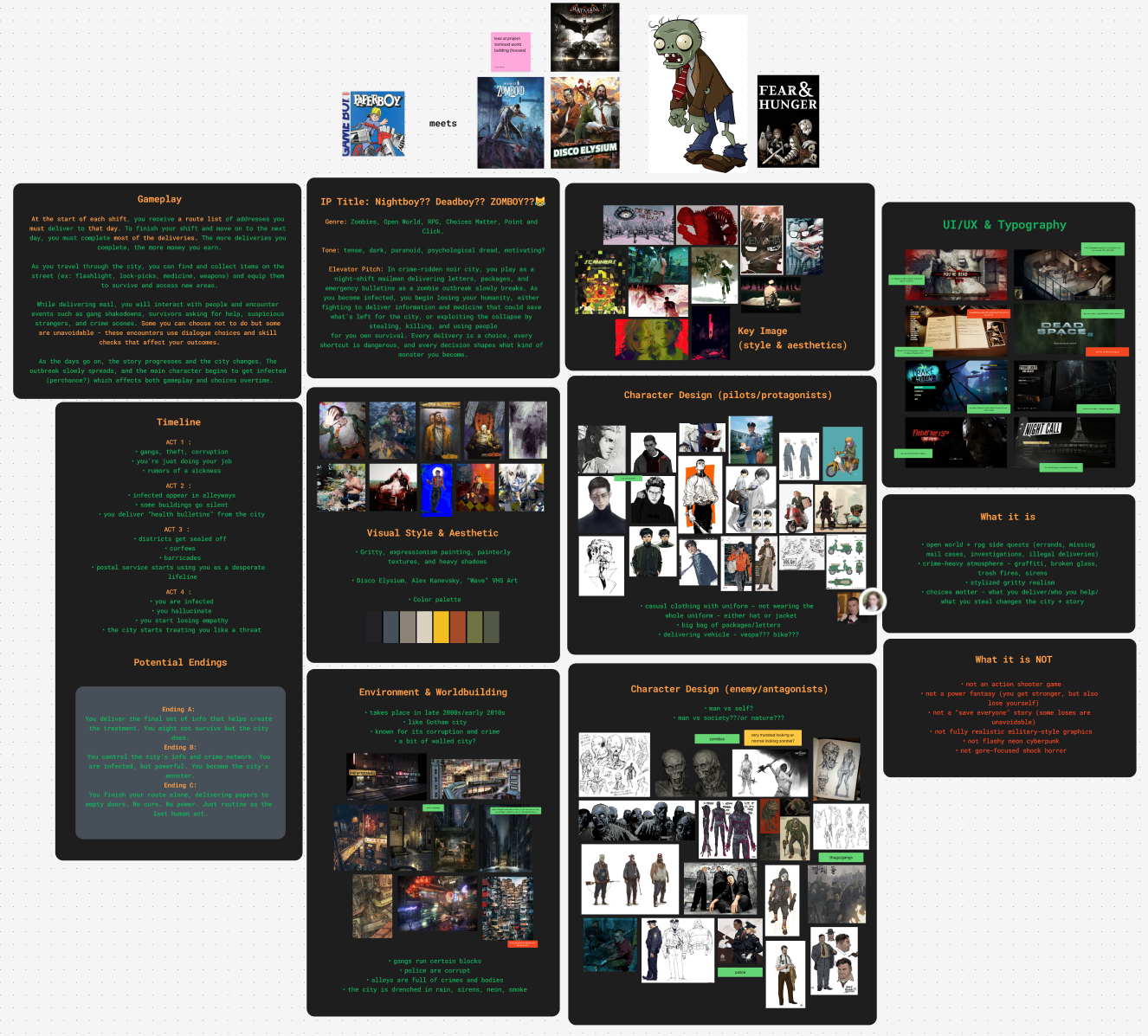
Yuna Pham’s Nightboy/Deadboy/ZOMBOY
Yuna Pham's project is a psychological horror reinterpretation set in a crime-ridden noir city during a slowly escalating zombie outbreak. Players take on the role of a night-shift mailman delivering letters, packages, and medical supplies while navigating the early stages of their own infection. The conceptual framework utilizes a "tense, dark, and paranoid" tone, drawing visual inspiration from gritty expressionism and titles like Disco Elysium and Fear & Hunger. This project transforms the traditional paper route into a series of moral dilemmas, where every delivery forces a choice between preserving one's humanity through altruism or prioritizing survival at any cost as the city descends into chaos.
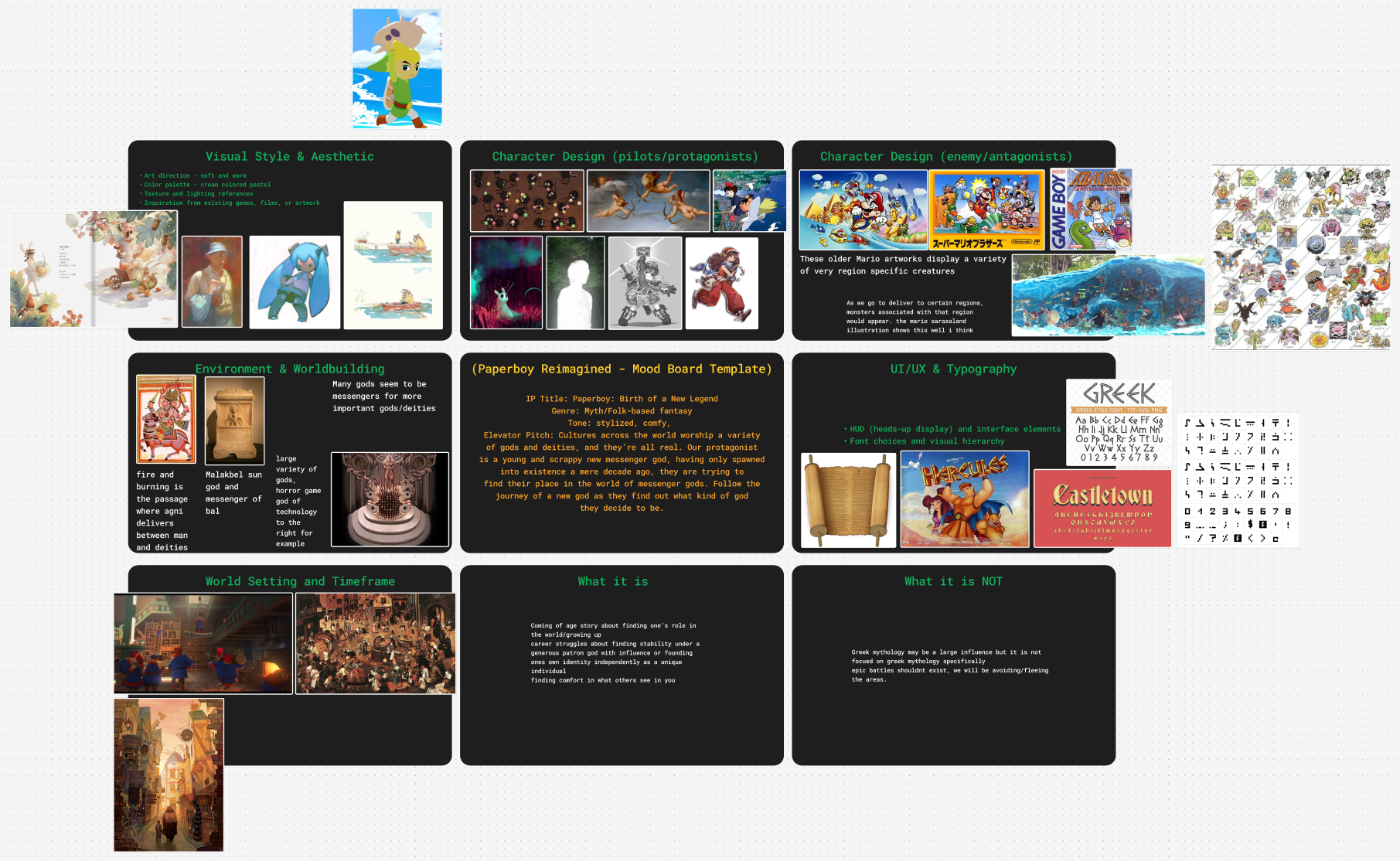
Youngsoo Bae’s Paperboy: Birth of a New Legend
Youngsoo Bae’s project, Paperboy: Birth of a New Legend, reimagines the delivery mechanic within a mythic, coming-of-age narrative. Players inhabit the role of a newly manifested messenger god navigating divine neighborhoods that represent various global religions. The core gameplay focuses on a 3rd-person exploration of stylized, myth-inspired lands where the player must deliver messages to deities while discovering their own divine identity. The visual framework employs a soft, warm art direction with a cream-colored pastel palette, drawing aesthetic inspiration from titles like The Legend of Zelda: The Wind Waker. By framing the delivery route as a spiritual journey, the project explores themes of stability and individual purpose within a vast, established pantheon.
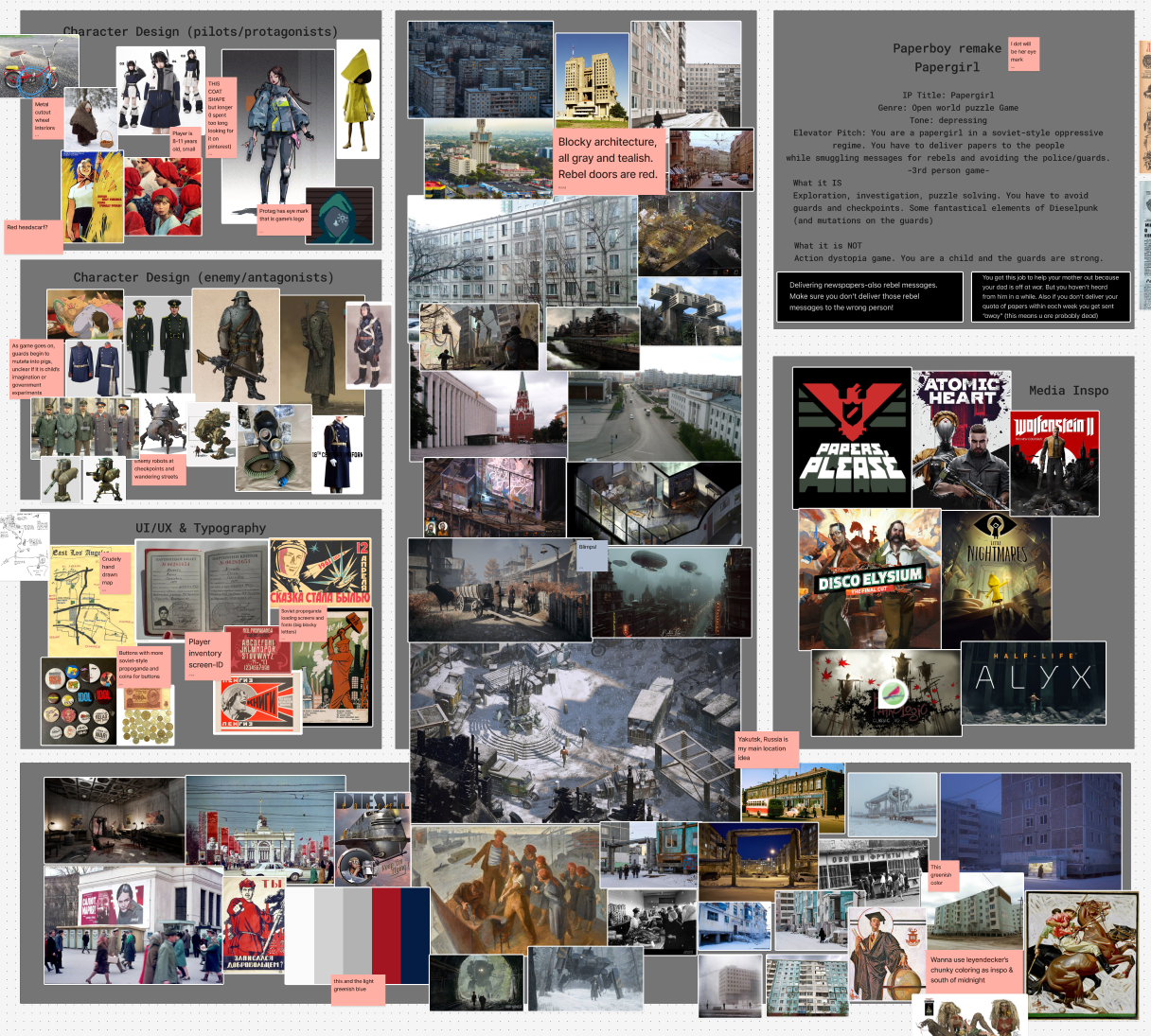
Anna D’s: Papergirl
Anna’s project, Papergirl, is an open-world puzzle game that reimagines the delivery mechanic within a Soviet-style oppressive regime. The concept combines the rhythmic navigation of Paperboy with the bureaucratic tension of Papers, Please, placing the player in the role of a girl delivering newspapers and smuggling rebel messages while avoiding military police and checkpoints. The visual direction utilizes a "depressing" dieselpunk tone characterized by blocky, gray, and tealish architecture, supplemented by Soviet-style propaganda and a color palette of deep reds and dark blues. This reinterpretation shifts the focus toward exploration and survival, where the player must meet strict delivery quotas to help their family while navigating the moral complexities of an active rebellion.
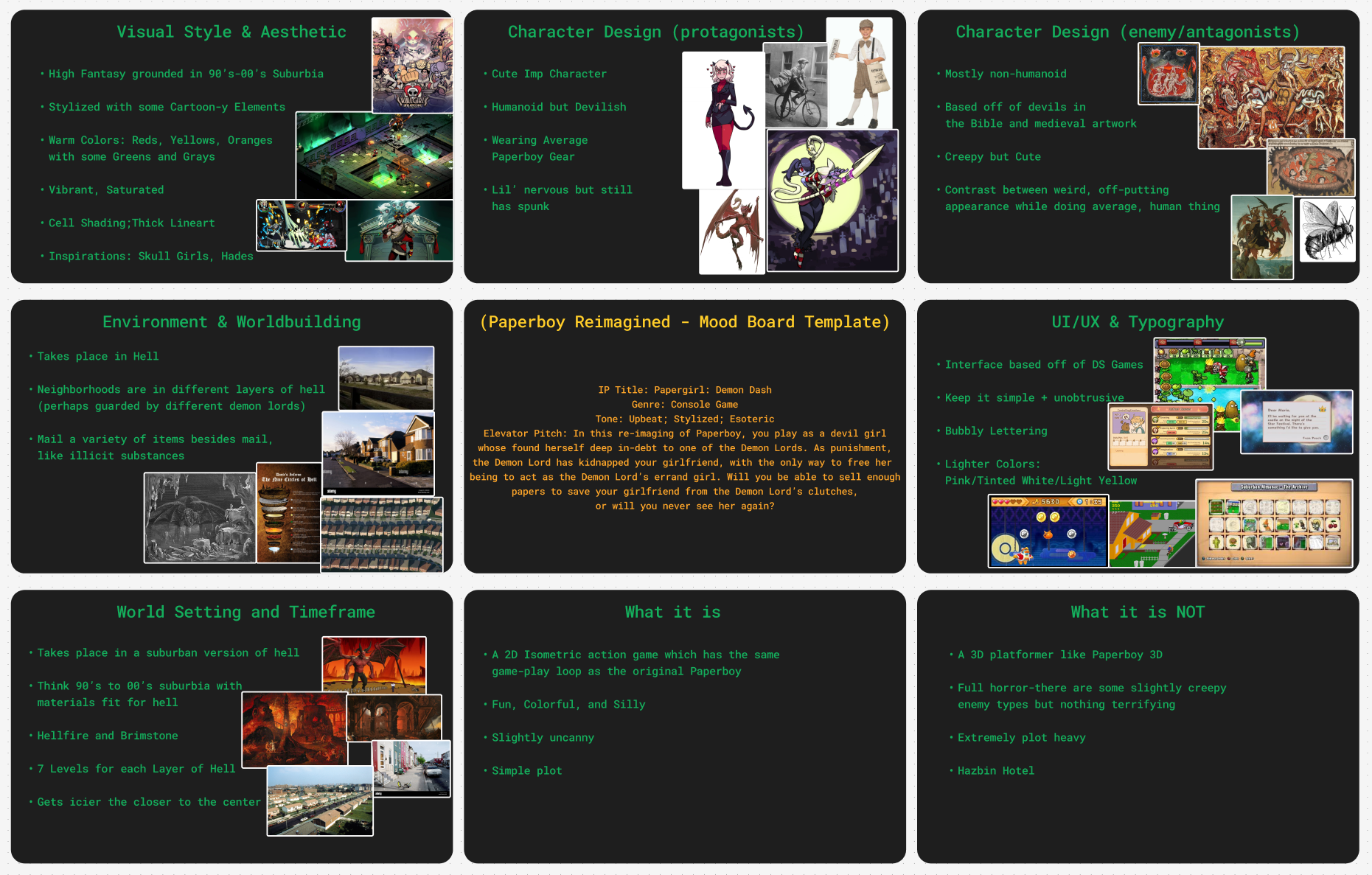
Cecil Sekera’s Papergirl: Demon Dash
Cecil Sekera’s project, Papergirl: Demon Dash, is an upbeat and esoteric console game that translates the traditional paper route into a suburban version of Hell. The narrative follows a "devil girl" protagonist who must act as an errand-runner for a Demon Lord to rescue her kidnapped girlfriend. The visual style is grounded in 1990s and 2000s suburbia but reinterpreted with "Hellfire and Brimstone" elements across seven distinct layers of Hell. Cecil's design process involved iterating on the protagonist's demonic features, including refining the horn shape, shortening the hair, and enlarging the tail to create a "creepy but cute" aesthetic. Drawing inspiration from titles like Skullgirls and Hades, the project utilizes a vibrant, cell-shaded art style and a UI inspired by Nintendo DS interface designs.
These FigJam boards show how useful the courier archetype can be for worldbuilding. By breaking down the core loop of Paperboy, students have moved past simple imitation to build out distinct narrative frameworks across different genres.
In our class discussions, we have been using a scale from 0 to 10 to measure these concepts. On this scale, 0 represents pure nostalgia, while 10 is complete originality with no real connection to the original game. This has been a helpful way to gauge where each project lands. Some students have looked for ways to tie their work more closely to the source, while others felt confident in their ideas right out of the gate. Most of the class landed in the 6 to 8 range, which seems to be the sweet spot for the quality of the work.
We are now moving from these conceptual maps to the technical execution of refined assets as the students start bringing these worlds to life. Our next focus is the protagonist character design assignment. We will go over those requirements and look at the student progress in the next post. Stay tuned.